Lung Supplement vs Breathing Exercises: Which to Do?
| The question | Lung supplement vs breathing exercises — which one actually helps everyday breathing? |
| The answer | Different jobs. Exercises train the mechanics; a supplement adds botanical and antioxidant support. |
| Best result | Most people combine both, plus fresh air, movement and hydration. |
Search “lung supplement vs breathing exercises” and you will find plenty of people quietly asking the same thing: if I only have the time or budget for one, which is the better bet for everyday breathing? It is a fair question, and the honest answer is that the two are not really competitors. They work on different parts of the same system, and understanding that distinction is what lets you choose well — or decide, as many people do, to use both.
In this comparison we will look at what breathing exercises actually do, what a lung supplement actually does, where they overlap, and where each one falls short. As always, none of this is medical treatment: if you have asthma, COPD, a persistent cough or any diagnosed respiratory condition, treat this as background reading and talk to your doctor before changing your routine.
What breathing exercises do
Breathing exercises are, at heart, physical training for the mechanics of breathing. When you practise slow, deep, diaphragmatic breaths — or techniques like pursed-lip breathing and box breathing — you are strengthening the diaphragm, improving your control over each breath, and often nudging your nervous system toward a calmer state. Over weeks of daily practice, many people notice that ordinary breathing feels more comfortable and less shallow, and that they can handle exertion or stress with a steadier rhythm.
The advantages are obvious: breathing exercises are free, require no equipment, can be done almost anywhere, and carry essentially no downside for a healthy person. Their limitation is just as clear. Exercises train the pump, so to speak, but they do not supply your body with any of the soothing, mucus-balancing or antioxidant compounds that botanicals provide. They improve how you use your lungs; they do not change the chemistry of the environment inside them.
What a lung supplement does
A lung supplement comes at the same goal from the opposite direction — from the inside. A well-formulated respiratory supplement combines botanicals that have a long traditional history and a growing base of modern research: mullein leaf for airway soothing, tiger milk mushroom for bronchial wellness, bromelain to help thin thick mucus, maritime pine bark for antioxidant support, and stinging nettle and asparagus for balance and whole-food nutrients. If you want the full breakdown, our guide to the best herbs for lung health covers each one in detail.
The strength of a supplement is that it delivers these compounds consistently and effortlessly — one capsule, taken daily, no preparation. Its limitation is the mirror image of the exercises: a supplement does nothing to train your diaphragm or teach you breath control. It supports the internal environment; it does not improve the mechanics. That is precisely why framing this as “lung supplement vs breathing exercises” can be misleading — each covers the other’s blind spot.
Lung supplement vs breathing exercises: a side-by-side
| What it trains | Exercises: the mechanics — diaphragm, capacity, control. Supplement: the internal environment — soothing, mucus balance, antioxidants. |
| Effort | Exercises: a few focused minutes daily. Supplement: one capsule daily, near-zero effort. |
| Cost | Exercises: free. Supplement: a monthly cost, lower per bottle in multi-packs. |
| Time to notice | Both build gradually over several weeks of consistency. |
| Main limitation | Exercises supply no botanicals; a supplement builds no breath control. |
Read that table and the takeaway writes itself: these are two halves of one routine, not two answers to one question. Breathing exercises make you a better breather; a botanical supplement gives your airways steady support to work with. The people who feel best about their everyday breathing tend to be the ones doing a little of both.
Give your daily breathing routine an inside edge
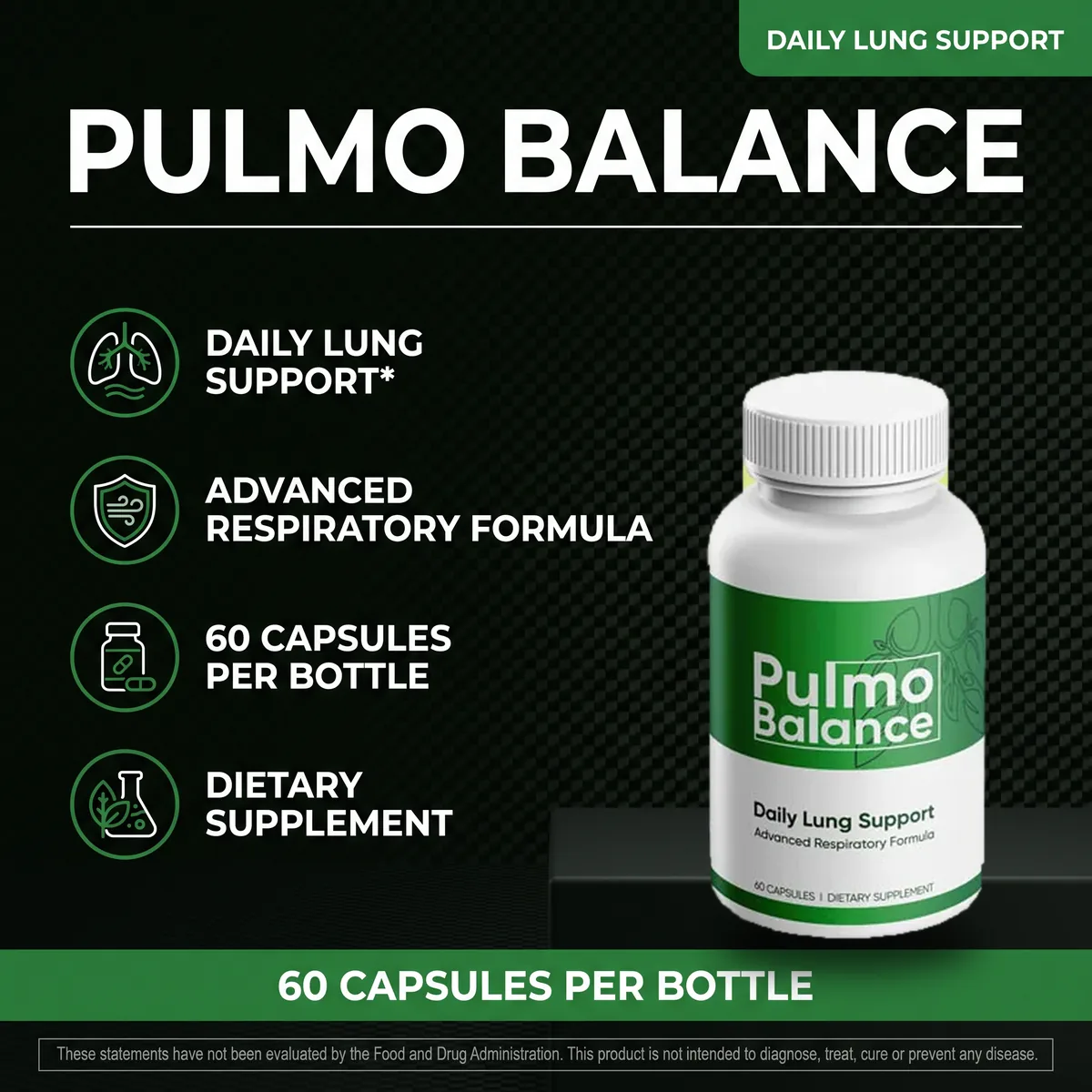
Pulmo Balance puts six well-studied respiratory botanicals into one daily capsule — the internal half of the routine your breathing exercises can’t cover. Backed by a 60-day guarantee.
See Pulmo Balance PackagesIf you can only pick one, how to decide
Sometimes budget or time really does force a choice, so here is a practical way to think about it. If you have never done any structured breathing work, start with breathing exercises — they are free, the foundational skill, and you will feel the calming effect quickly. If your habits are already solid — you move, you breathe well, you get fresh air — and you are looking for an extra, targeted layer of airway and antioxidant support, a daily supplement is the sensible add-on. Neither choice is wrong; they simply suit different starting points.
What you should not do is treat either one as a fix for a medical problem. Supplements and breathing drills are everyday wellness habits, in the same category as walking more or drinking enough water. They are not treatments, and they are not a reason to delay seeing a doctor about a symptom that concerns you.
The habits that make both work better
Whichever way you lean, a few basics amplify everything. Open a window and air out stuffy rooms so you are breathing cleaner indoor air. Get outside for a daily walk — cardio is itself excellent lung training. Stay well hydrated so mucus stays thin and easy to clear, which is exactly the job breathing exercises and ingredients like bromelain are each trying to support. And keep smoke and heavy pollution exposure to a minimum. On timing, our note on the best time to take a lung supplement pairs nicely with a morning or evening breathing session, so the two habits reinforce each other on the same schedule.
Build a routine you can actually keep
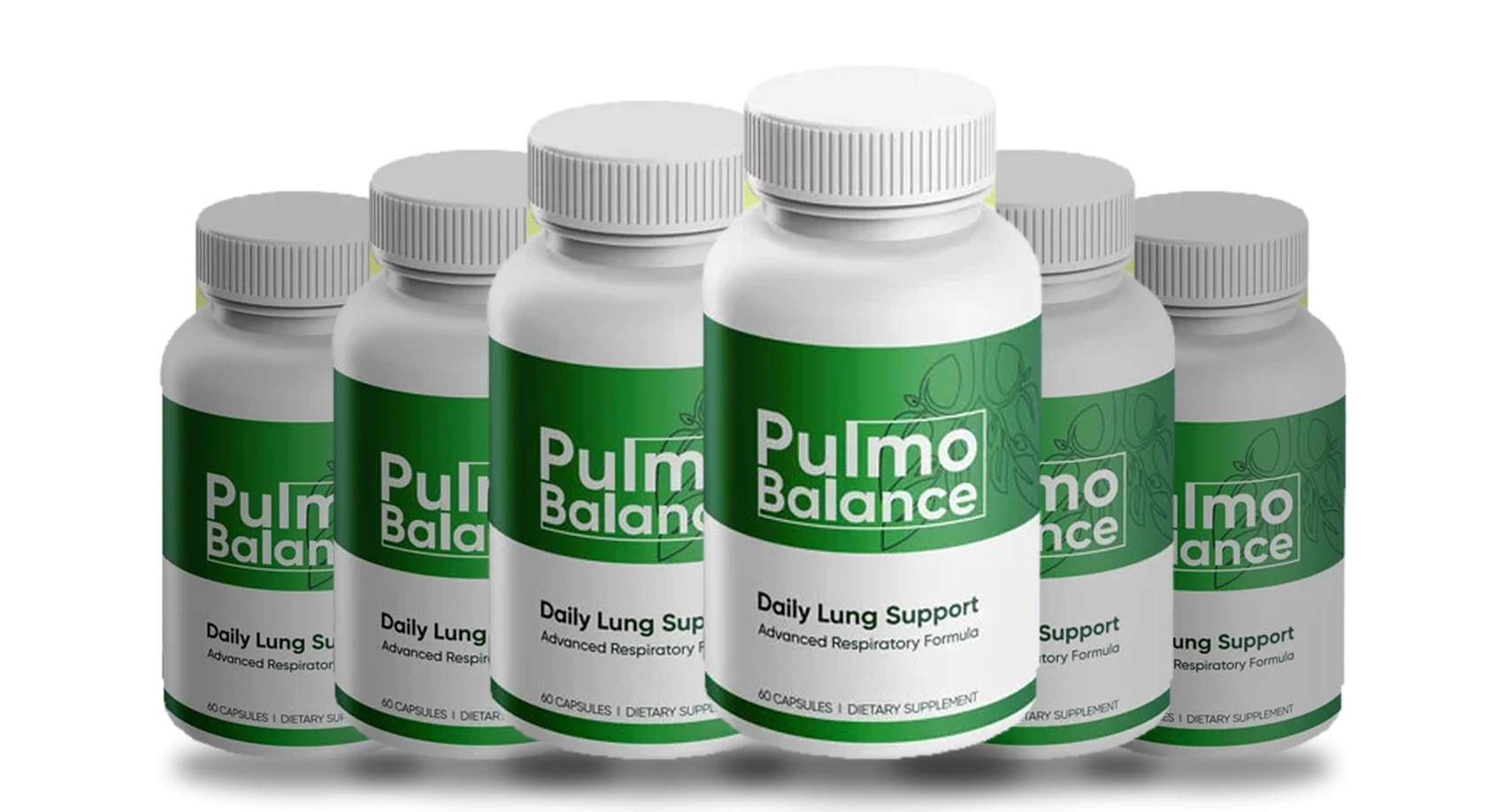
Consistency is the whole game — for exercises and for botanicals alike. A multi-bottle pack gives your routine a several-month runway (and a lower price per bottle), so a few missed days never derail the trial. With a 60-day guarantee, it is a low-risk way to add the supplement half to your breathing practice.
Compare Pulmo Balance PackagesA sample day that uses both
To make this concrete, here is what a combined routine can look like without adding real time to your day. With breakfast, take your daily capsule and a full glass of water — three seconds, done. While the coffee brews, spend two or three minutes on slow diaphragmatic breathing: inhale gently through the nose, let the belly expand, and exhale a little longer than you inhaled. On your commute or lunch break, get outside for a short walk in fresher air. In the evening, if you enjoy it, add a few rounds of pursed-lip breathing while you wind down. None of these steps is heavy, and together they cover both halves of the “lung supplement vs breathing exercises” question at once.
The common mistake is treating either habit as a sprint. People try an intense breathing session for three days, feel little, and quit; or they take a supplement for a week, notice nothing dramatic, and assume it does not work. Both misjudge how this kind of support behaves. Breath control is a skill that compounds, and botanicals build gradually — so the honest expectation for both is steady, modest improvement you notice over weeks, not a switch that flips overnight. Set that expectation, keep the routine light enough to sustain, and you give both approaches the fair chance they need.
The trial evidence, side by side
Breathing practice is the side of this comparison with real clinical study behind it. A systematic review in the Journal of the Pakistan Medical Association (2024) gathered the trials on breathing techniques in asthma, and a broader review in the Journal of Allergy and Clinical Immunology: In Practice (2025) assessed non-pharmacological interventions for dysfunctional breathing in adults. That is a body of evidence a supplement in this category simply does not have.
The best the capsule side can offer is early and open-label — for example the tiger milk mushroom study in Scientific Reports (2021), which tracked respiratory and antioxidant measures without a placebo arm. NCCIH’s Using Dietary Supplements Wisely is a useful reminder of how much weight that kind of study can carry. If you are choosing one, choose the breathing practice: it is free, it is better evidenced, and it starts today.
Neither is treatment. Breathing techniques are taught as an addition to asthma care, never a replacement for an inhaler. For the wider question of what supplements can deliver, see do lung supplements actually work; for the third lever, cleaning up the air itself, see lung supplement versus air purifier; and for realistic timing, how long a botanical takes to work.
See a doctor, not a supplement, for breathing that is getting worse. New, sudden or worsening breathlessness, a cough lasting more than three weeks, coughing up blood, chest pain, or a reliever inhaler that has stopped working can all signal asthma, COPD, infection or heart disease, and need assessing by a clinician. Seek emergency care for severe breathlessness, blue lips or chest pain. No dietary supplement treats, cures or prevents any lung condition.
Frequently asked questions
Lung supplement vs breathing exercises — which is better?
They do different jobs, so it is not really either/or. Breathing exercises train the mechanics of breathing — the diaphragm, capacity and control — while a lung supplement provides botanical and antioxidant support from the inside. Most people get the best everyday results by doing both consistently, alongside fresh air and hydration.
Can breathing exercises replace a lung supplement?
Breathing exercises are free, effective for building control and capacity, and worth doing on their own. They do not, however, deliver the soothing, mucus-balancing or antioxidant botanicals that a supplement provides. The two are complementary rather than interchangeable.
Do I need a supplement if I already exercise?
Not necessarily — general fitness and cardio already support your lungs well. A daily botanical supplement is an optional extra layer of support, useful for people who want targeted airway and antioxidant ingredients on top of their movement routine.
How long before breathing exercises or a supplement help?
Breathing exercises can feel calming immediately, with capacity and control improving over a few weeks of daily practice. Botanical supplements also build gradually, so most people take them consistently for several weeks to judge how they feel.
Is it safe to do both together?
For most healthy adults, yes — a daily breathing practice and a botanical supplement work well side by side. If you have a diagnosed respiratory condition or take medication, check with your doctor before adding any new supplement.
About the Pulmo Balance Research Team
The Pulmo Balance Research Team is an independent group of writers and reviewers focused on respiratory wellness. We compare approaches honestly, describe the traditional and general use of botanicals, and write in plain English. Our guides are for information only and are not medical advice — please speak with your doctor before starting a new supplement or exercise routine.
References
- The role of breathing techniques in the management of asthma: A systematic review — J Pak Med Assoc, 2024. PMID 39028058.
- Nonpharmacological Interventions for Dysfunctional Breathing in Adults: A Systematic Review — J Allergy Clin Immunol Pract, 2025. PMID 40345332.
- Effect of tiger milk mushroom (Lignosus rhinocerus) supplementation on respiratory health, immunity and antioxidant status: an open-label prospective study — Sci Rep, 2021. PMID 34083710.
- Using Dietary Supplements Wisely — NCCIH.
- Research on an ingredient is not evidence about a finished product. Every PubMed identifier above was re-checked against the NCBI record on 3 September 2026 and resolves to the paper named beside it.
† These statements have not been evaluated by the FDA. This product is not intended to diagnose, treat, cure or prevent any disease. This article is for general information only and is not medical advice.